Learning to Choose, Not Accumulate, in The Middle
A little note from me,
I’m writing about the middle because it’s where I am.
It’s where my rope lives now. It’s where I lost confidence for a while, where motivation dipped, and where progress stopped feeling obvious. It’s also where my curiosity returned.
The middle is where I stopped trying to prove that I was learning and started paying attention to how I was learning. It’s where I realized that growth doesn’t come from constant expansion, but from staying engaged with what’s already in front of me.
This is where I learned to be a forever student. Not by chasing more, but by showing up with attention and care each time I tie.
That’s the space I’m writing from.
You got this. We got this.
- Nat
Learning to Choose, Not Accumulate, in The Middle
As rope practice matures, growth becomes less about accumulation and more about choice. A thoughtful look at how learning evolves in the middle of a rope journey, and how classes and instruction serve a different purpose as depth replaces novelty.
How classes and instruction change as you grow
The beginning of a rope journey comes with a lot of guidance.
There are clear answers. Clear steps. Clear encouragement. You learn what things are called, how they work, and why they matter. Classes feel reassuring. Progress feels visible, because it often looks like adding something new.
At a certain point, that model stops working.
Not because you’ve stopped growing, but because growth no longer comes from accumulation. It comes from choice.
In the middle of a rope journey, learning changes shape.
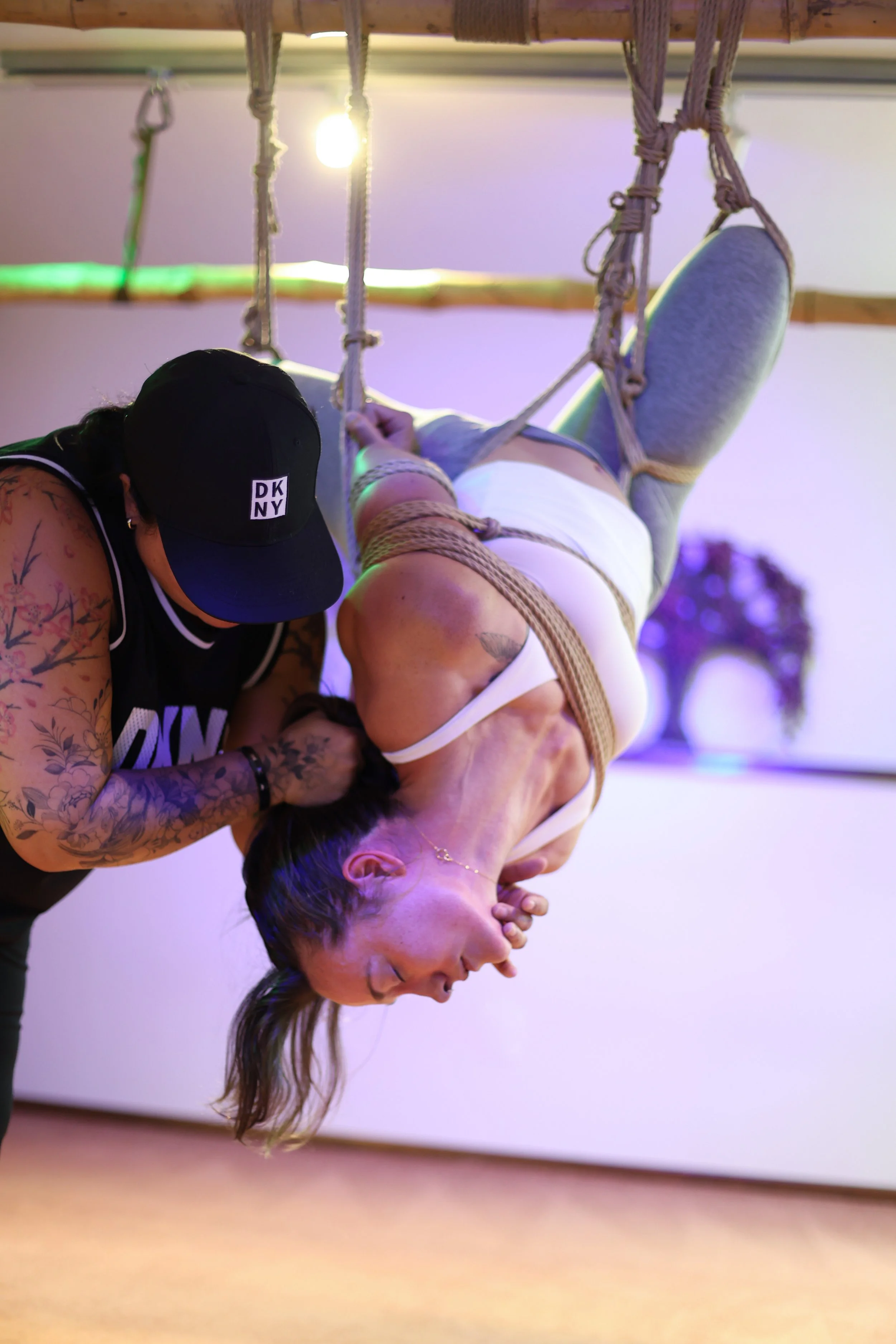
Natalie Rose and Rion Riot during a private lesson, not just learning the “what” and “when” but making the “why” a priority.
When learning stops looking like more
Early learning is easy to name. You can point to a new tie, a new position, or a new concept and say, “I didn’t know this before.”
In the middle, learning becomes quieter and harder to label.
For people being tied, growth often shows up as awareness rather than reaction. You begin to notice early cues in your body. You recognize patterns in how you respond to pressure, stillness, elevation, or intensity. Your communication becomes more precise, even if your experience looks less dramatic from the outside.
For people tying, learning often looks like restraint. You slow down. You choose not to use everything you know. You pay closer attention to timing, pacing, and what the person in front of you is actually giving back.
This kind of learning doesn’t feel impressive. It can feel repetitive. It can feel subtle.
And because it doesn’t add anything obvious, it’s easy to wonder whether you’re learning at all.
The shift from collecting to choosing
One of the biggest transitions in the middle is moving away from the idea that growth means doing more.
Instead, growth begins to look like deciding what not to do.
Which techniques matter here.
Which skills serve this body.
Which ideas are worth revisiting slowly instead of replacing quickly.
This is where rope stops rewarding accumulation and starts rewarding discernment.
You’re no longer asking, “What else should I learn?”
You’re asking, “What actually belongs in my practice?”
How the role of classes changes
In the beginning, classes provide structure and certainty. You’re learning frameworks. You’re building vocabulary. You want someone to tell you what’s correct.
In the middle, the right classes serve a different function.
They don’t promise answers. They help you refine judgment.
They create space for nuance instead of flattening it. They acknowledge that bodies change, scenes vary, and experiences don’t repeat cleanly. They slow things down instead of pushing forward.
Classes stop being about what comes next and start becoming places where you learn how to notice what’s already happening.
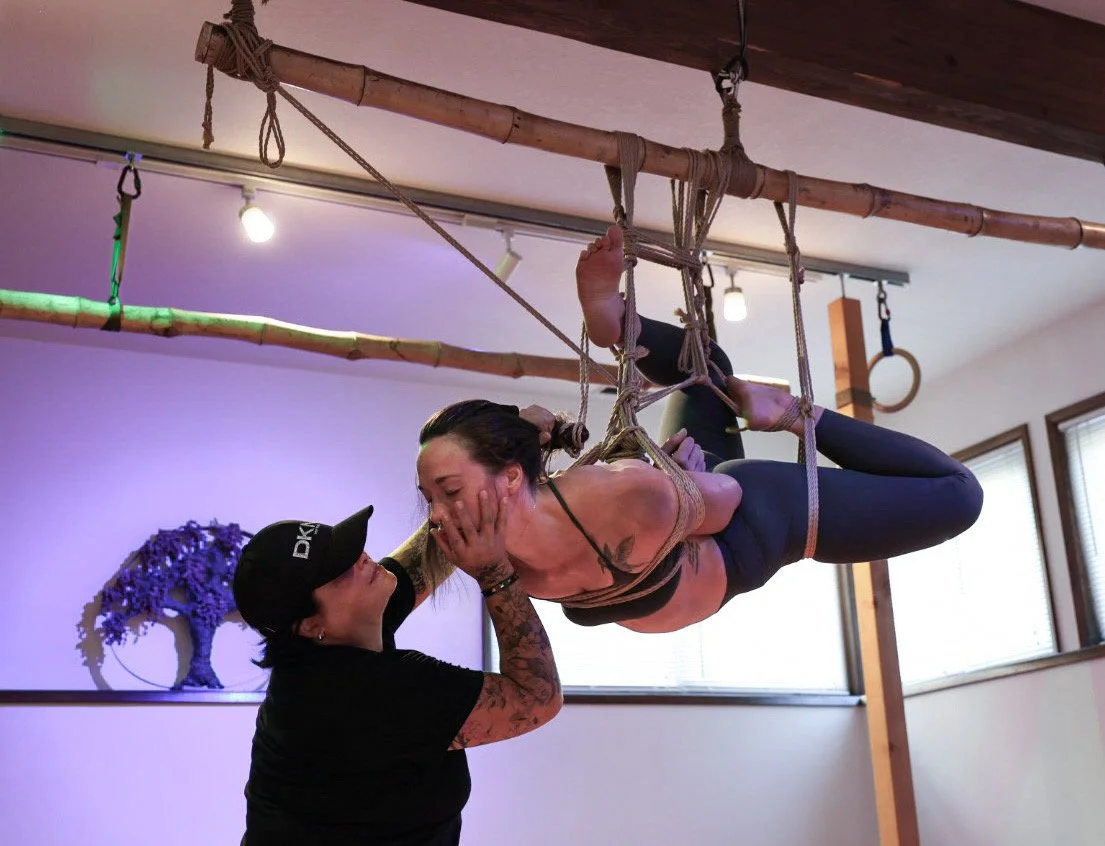
Natalie Rose and Rion Riot during a private lesson, choosing to prioritize connection and the relationship while learning.
What good instruction sounds like now
Instruction that supports this stage tends to sound different.
It names complexity instead of simplifying it. It talks about timing, responsiveness, and decision making, not just technique. It welcomes questions that don’t have a single correct answer.
For people being tied, the right instruction validates variability. It makes room for changing reactions and emphasizes listening to the body rather than performing a response.
For people tying, it focuses on choice. When to escalate and when not to. How to respond to subtle feedback. How restraint can create more depth than addition.
These classes often feel quieter.
There may be less spectacle and more conversation. Less demonstration for effect and more explanation of why choices are being made. Learning happens as much through discussion and reflection as it does through rope.
You leave feeling oriented rather than overwhelmed.
Learning becomes relational
Another shift in the middle is that learning stops being purely individual.
Your growth is no longer just about what you can do with rope. It’s about how you respond to another person’s experience over time. It’s about communication, timing, and trust built through repetition.
Classes that support this stage often emphasize interaction and reflection. They create space for shared language to develop and for patterns to be noticed together.
This is where rope starts feeling less like a collection of skills and more like a practice you live inside.
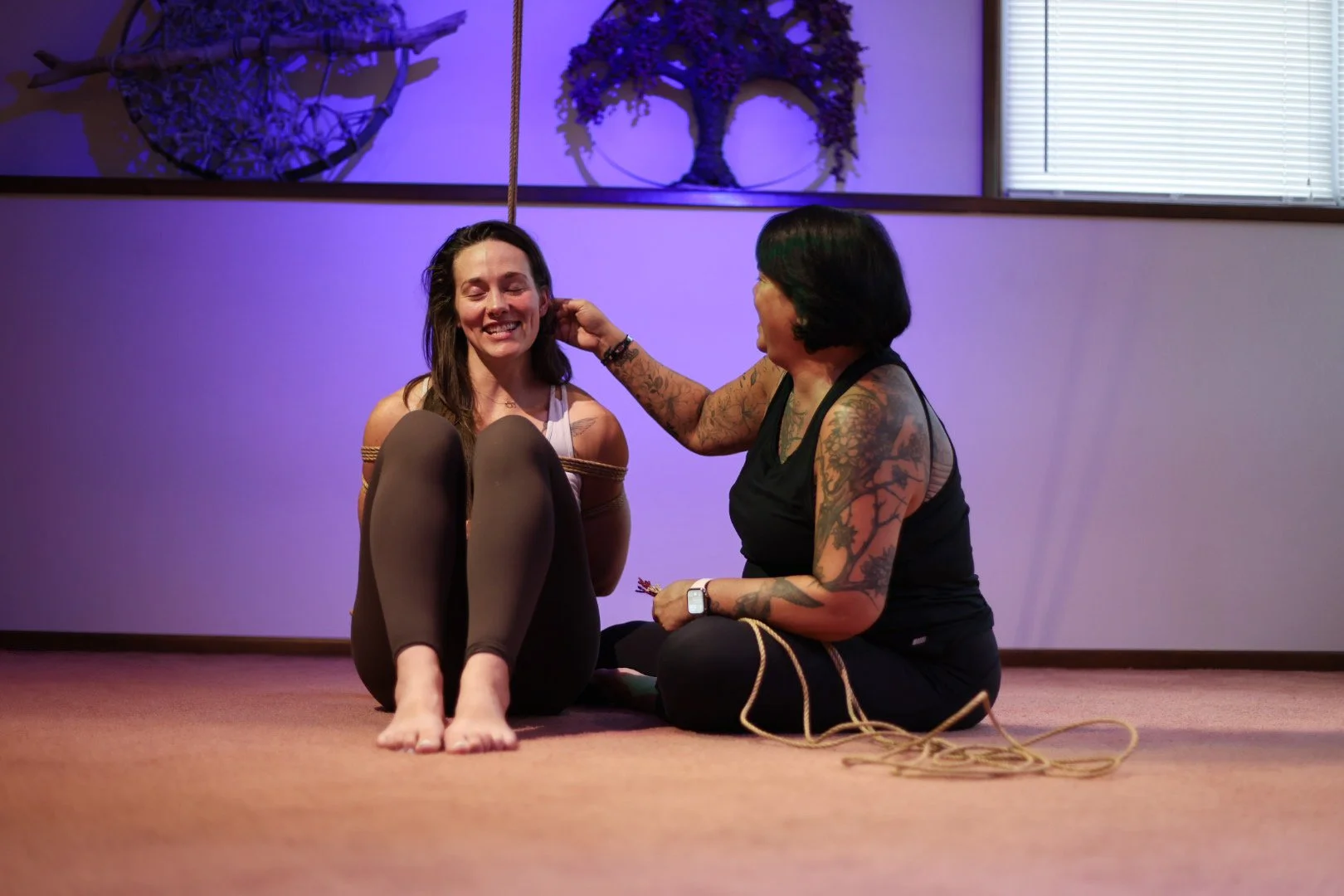
Natalie Rose and Rion Riot taking a moment to appreciate one another before they learn a new shape together during a private lesson.
Progress looks different here
In the middle, progress rarely announces itself.
You may return to familiar material and notice something new. You may repeat the same position and experience it differently. You may realize that your most meaningful scenes are simpler, slower, and more responsive than they used to be.
This isn’t a lack of growth.
It’s depth.
Curiosity over accumulation
The middle rewards curiosity more than certainty.
The people who continue growing are not the ones who collect the most techniques. They’re the ones who stay attentive. They revisit foundations with new eyes. They choose instruction that meets them where they are, not where they think they should be.
Learning in the middle is not about doing more.
It’s about learning how to notice, respond, and choose with care.
And when classes support that kind of learning, they don’t just teach rope.
They teach how to stay present inside it.
Until next time...
Take a deep breath.
Unclench your jaw.
Tie. Untie. Retie.
You've got this.