Aftercare Is Part of the Practice
Aftercare is more than what happens after rope. Learn how care, recovery, and self care support emotional safety, consent, and sustainable rope practice for both tops and bottoms.
Aftercare Is Part of the Practice
How Care, Recovery, and Responsibility Sustain Rope Over Time
There’s a moment in many rope journeys when the focus shifts.
Early on, attention is often placed on safety, technique, and getting through the scene itself.
Aftercare is discussed, but usually as something that happens afterward. A closing gesture. A soft landing. An important detail, but still a detail.
As practice deepens, that framing stops holding.
Aftercare stops feeling like the end of something and starts revealing itself as part of the work.
Not because scenes become riskier, but because the body and nervous system become more familiar. More honest. Less willing to be rushed past.
Care is no longer optional. It becomes foundational.
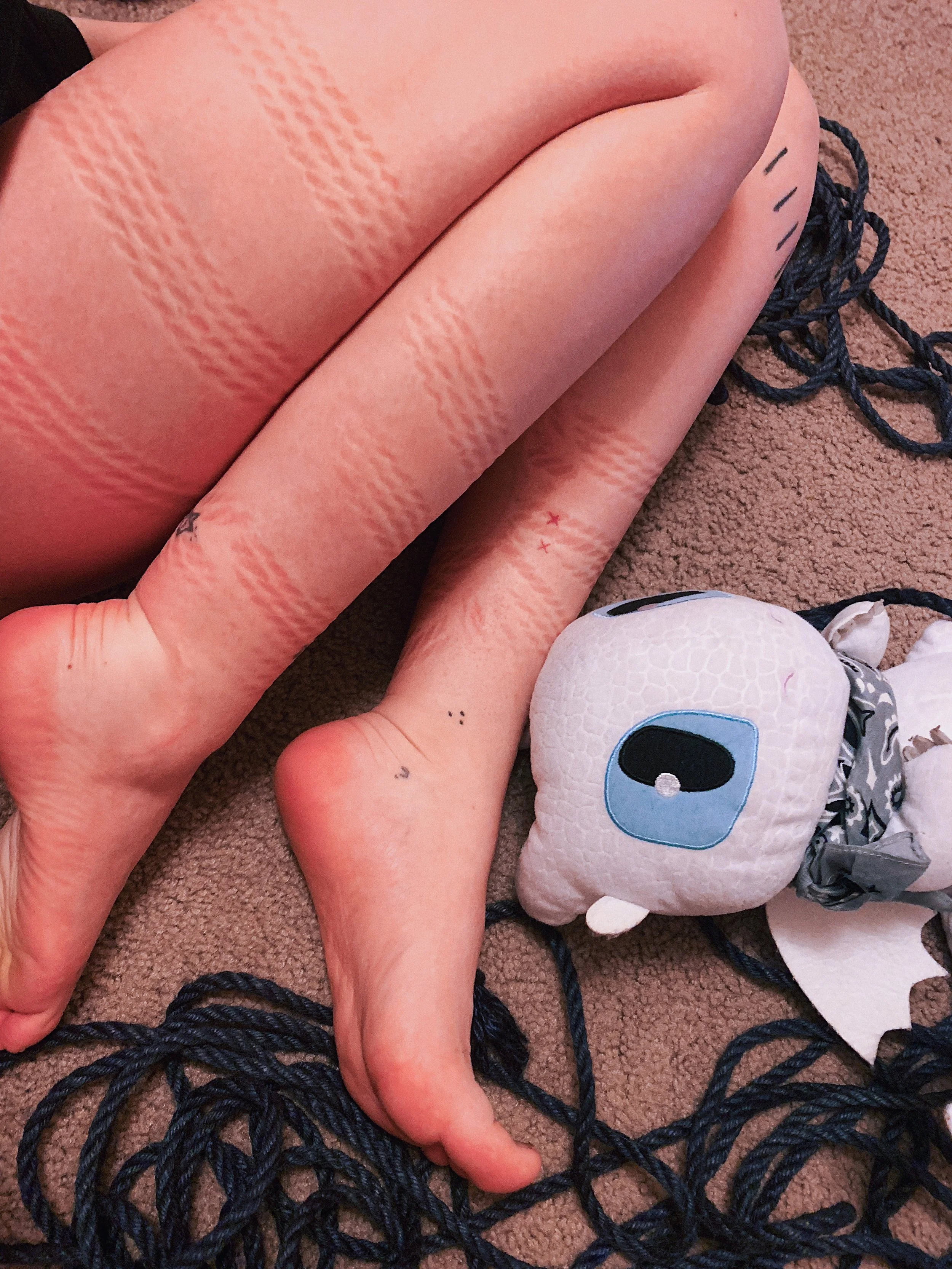
This is Chuck taking a deep breath after a suspension session with Natalie Rose
Aftercare isn’t just about recovery
Aftercare is often described in physical terms. Water. Food. Blankets. Rest.
Those things matter. But they are not the whole picture.
What people are often responding to after rope is not just physical exertion. It’s nervous system activation. Emotional processing. The quiet recalibration that happens after focus, intensity, connection, or surrender.
That experience exists on both sides of the rope.
For people being tied, aftercare may involve tending to sensations that linger, emotions that surface, or a sense of vulnerability that doesn’t immediately fade. Even when a scene feels good, the body can feel tender. The mind can feel open or raw. Integration takes time.
For people tying, the drop can look different but feel just as real. There may be fatigue, emotional letdown, self-critique, or a delayed awareness of how much responsibility was carried. Care isn’t something you only provide. It’s something you also need.
When aftercare is treated as one-sided, something essential gets missed.
Care as shared responsibility
As rope practice matures, care becomes less about roles and more about relationship.
It becomes clear that no one arrives at a session as a neutral participant. Everyone brings a nervous system, a history, a body with limits, and a capacity that shifts over time. Rope amplifies what is already present.
Aftercare, then, is not about fixing something that went wrong. It’s about tending to something that was engaged.
When care is shared, it changes the tone of practice. People check in differently. They pace scenes with more awareness. They recognize that staying regulated matters more than pushing through.
Care becomes less reactive and more intentional.
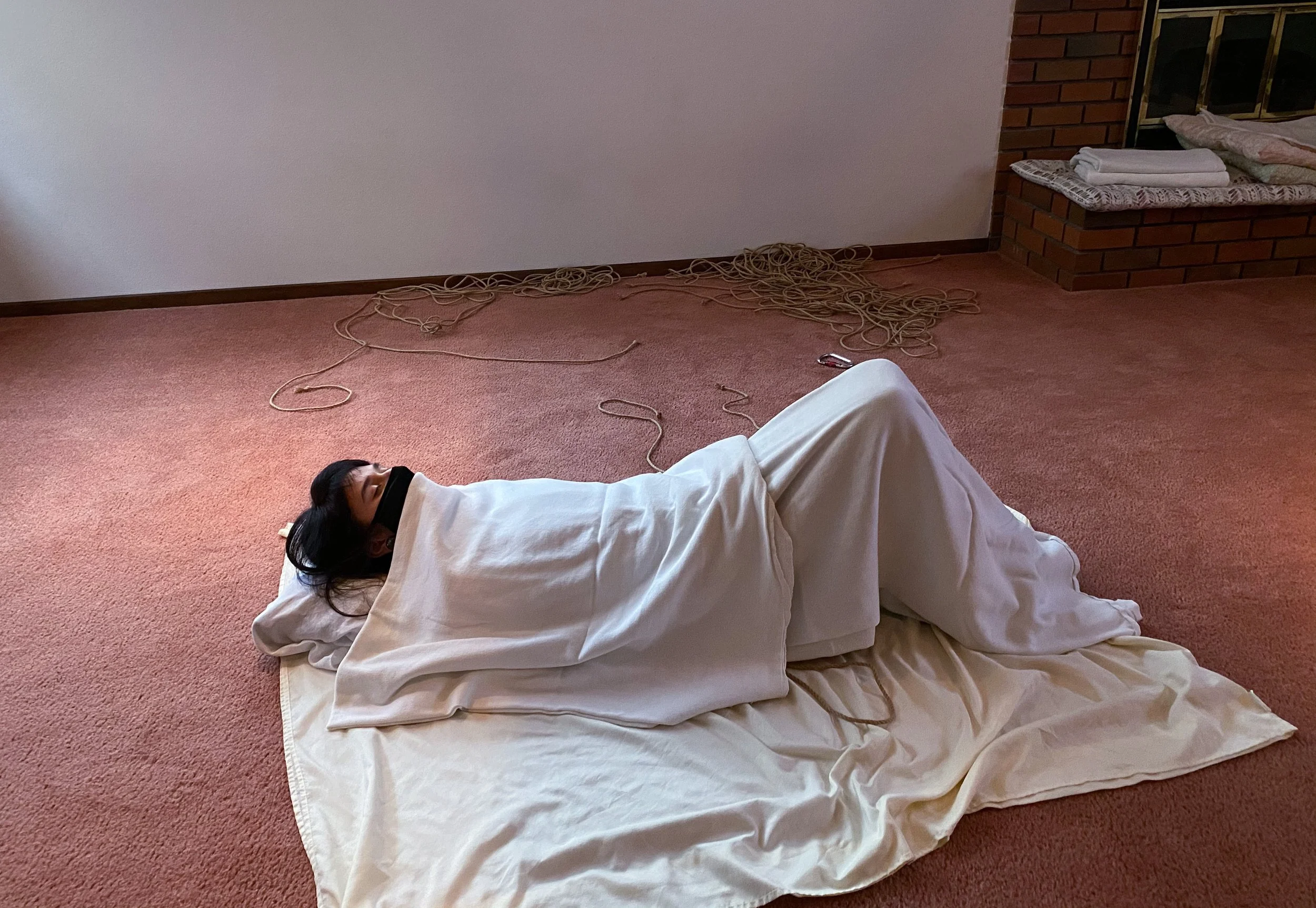
This is Bex relaxing under warmed blankets after a suspension session with Natalie Rose
Where my own relationship to care changed
There was a point in my own rope journey when I realized that my motivation wasn’t disappearing. My body was asking for something different.
I had learned how to get through scenes. I had learned how to hold intensity. But I hadn’t yet learned how to recover with the same attention I brought to the rope itself.
It took time to understand that honoring aftercare wasn’t a sign of fragility. It was a sign of listening.
That shift changed how I showed up. It changed how I negotiated. It changed how I thought about longevity. Care stopped being something I added on and started becoming something I planned for.
That’s when rope began to feel sustainable again.
Self care is part of consent
One of the quiet truths about aftercare is that it begins before rope ever touches skin.
It shows up in how people prepare. How they eat, rest, hydrate, and check in with themselves.
It shows up in whether they allow themselves to say no when their capacity is low, even if the opportunity feels exciting.
Self care is not separate from consent. It’s one of the ways consent stays honest over time.
For people being tied, this might mean recognizing when curiosity outweighs readiness, or when rest is more supportive than another scene. For people tying, it might mean noticing signs of burnout, pressure, or emotional depletion and responding with care rather than expectation.
Ignoring these signals doesn’t build resilience. It erodes trust with yourself.
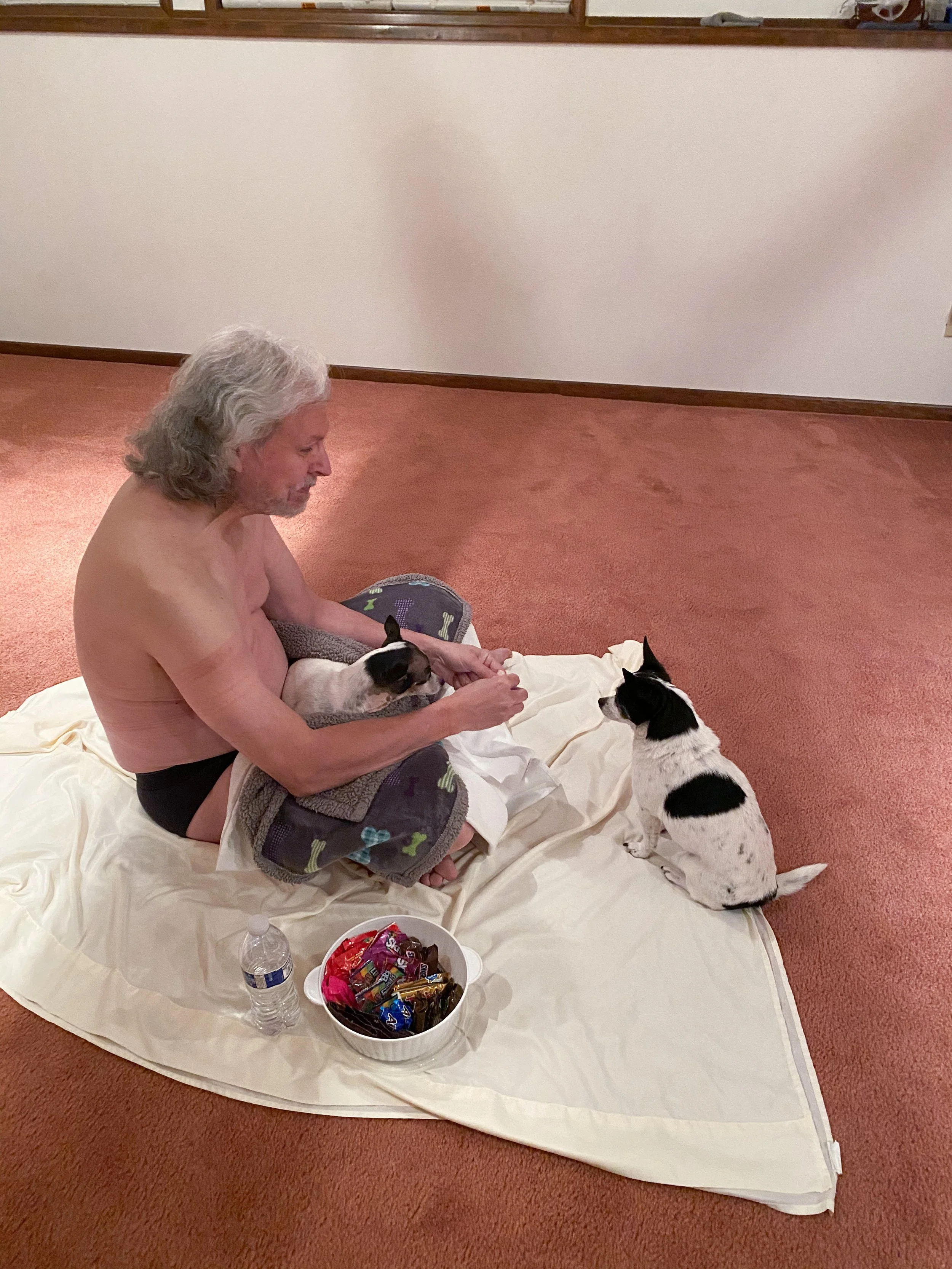
Athraell with Moo-Shew, Louis, blankets, snacks, and water after a suspension session with Natalie Rose
Care is what allows practice to continue
Sustained rope practice asks for more than skill or interest. It asks for the ability to recognize what your body and nervous system need and to respond with care.
Exhaustion can be mistaken for a lack of resilience. Emotional drop can be misunderstood as incompatibility. The need for care can quietly register as doing something wrong. When those experiences are recognized for what they are, they stop feeling like problems and start becoming part of an informed practice.
When aftercare and self care are understood as foundational rather than optional, something settles. Rope stops feeling like something to push through and starts becoming something you can remain in with steadiness.
Care is what makes repetition possible. It allows depth to develop without unnecessary strain. It supports the integration of intense moments so they become part of your understanding rather than something that lingers without context.
Staying in relationship with your practice
Aftercare isn’t about ending well.
It’s about staying in relationship with what rope brings up for you. Physically. Emotionally. Relationally.
When care is woven into practice, rope becomes less about what you can handle and more about what you can sustain.
That kind of practice doesn’t rush. It listens. It adjusts. It allows for cycles of intensity and rest. And that’s what keeps people here.
Not technique alone.
Not experience alone.
Care.
If you are reflecting on sustainability in rope, you may also want to read Learning to Choose, Not Accumulate, in Rope, a piece about how growth changes in the middle of a rope journey.
Until next time...
Take a deep breath.
Unclench your jaw.
Tie. Untie. Retie.
You've got this.
Next Post goes live on February 16th at 3:00pm. Stay tuned for - What Actually Makes Rope Feel Good?