Building Skill as a Rope Top
Building Skill as a Rope Top: Consent, Communication, and Consistency for a Forever Student
Why these skills matter
Topping in rope is not about perfection, performance, or memorizing patterns.
It starts with communication, is shaped by consent, and is held together through consistency.
Your partner’s body responds to your choices — your pacing, your clarity, your presence, your confidence, and your ability to stay grounded when things get intense. Skill as a rope top doesn’t grow from fancy ties. It grows from the conversations you have, the way you observe your partner, and your willingness to stay a student no matter how long you’ve been tying.
When communication is clear, consent is thoughtful, and your behavior is steady, rope becomes safer, deeper, and far more meaningful for both people.
These are the qualities that make someone trustworthy in rope.
These are the qualities that make someone a joy to tie with.
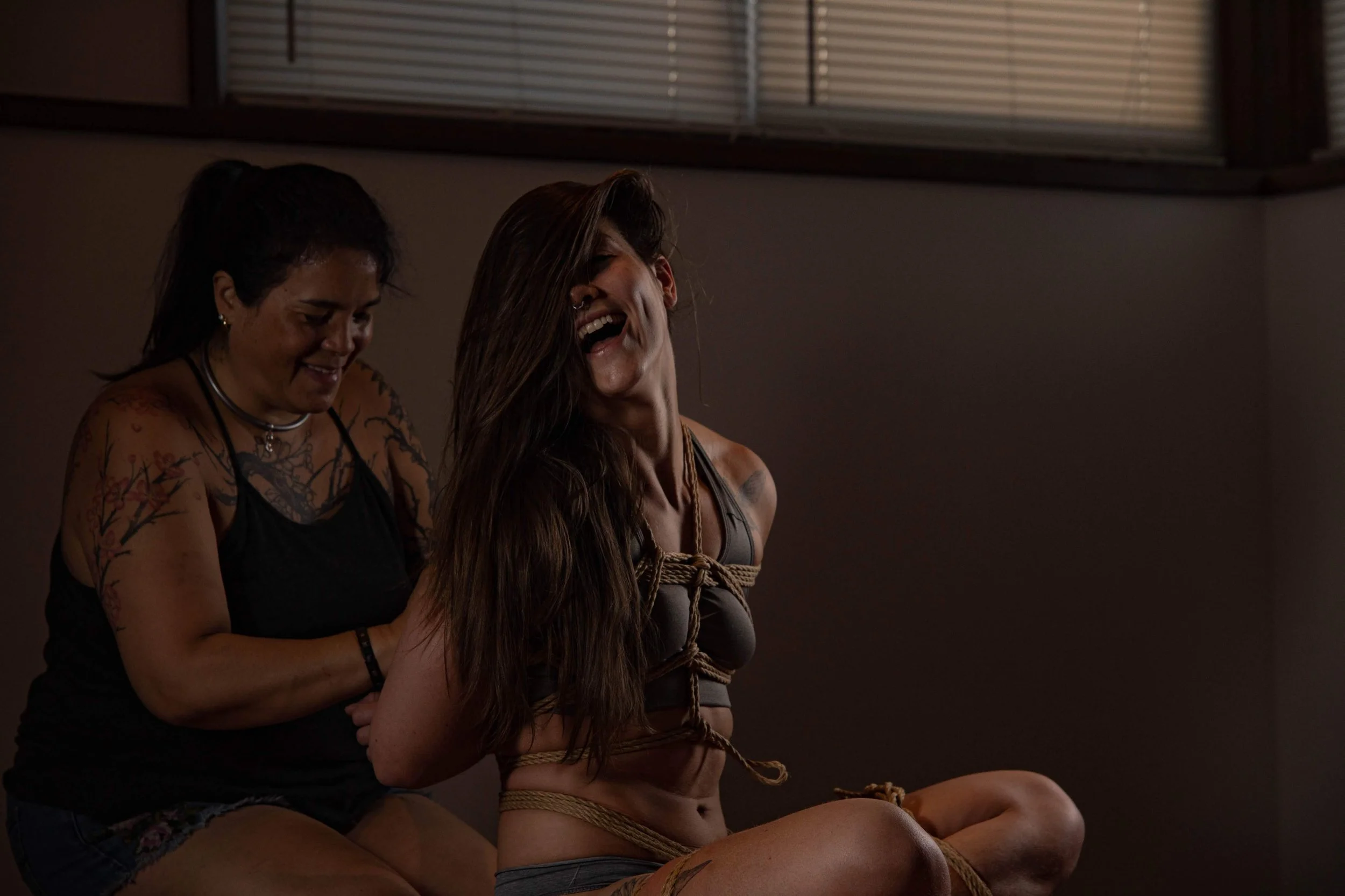
Rion Riot being tied by Natalie Rose
What consent, communication, and consistency really are
Consent is not a form you fill out or a box you check. It is an agreement you build together through honesty, curiosity, and transparency about what you both want, what you are open to exploring, and what needs care or protection. Consent lives in conversation, observation, and response. It is something you actively participate in, not something you assume once and carry forward unchanged.
Real consent includes room for uncertainty. It allows someone to say “I don’t know yet,” or “I want to try this gently,” or “That sounded good in theory, but my body feels different now.” As a rope top, honoring consent means listening without defensiveness and responding genuinely. It means recognizing that consent can evolve as sensations, emotions, and intensity shift.
Consent also includes your responsibility to name your own limits. Being clear about what you will and will not offer creates safety on both sides. It sets expectations, reduces guesswork, and makes space for trust to grow. When both people know where the edges are, exploration becomes more grounded instead of risky.
Communication is how you keep that consent alive.
It is the shared language you create before, during, and after rope to stay connected to what is actually happening. Communication isn’t just verbal. It shows up in breath, posture, tension, micro-movements, and timing. A skilled rope top learns to read these cues and respond before something becomes uncomfortable or unsafe.
Consistency is what allows consent and communication to matter.
It is the reliability you bring into every session, every tie, and every interaction. When your behavior is steady, your pacing predictable, and your responses thoughtful, your partner doesn’t have to guess who you are going to be. That predictability is what allows people to relax, open up, and take risks with you.
Together, consent, communication, and consistency form the foundation of responsible topping.
They teach you what kind of experience your partner is hoping for.
They help you recognize what feels good, what feels unsafe, and what needs attention right away.
They show you how your partner’s body responds to pressure, load, elevation, breath, and intensity.
This is where the idea of the forever student lives.
A forever student pays attention.
A forever student asks questions without ego.
A forever student adjusts before something becomes a problem.
Rather than trying to control every moment, you stay responsive to the person in front of you.
That responsiveness is not instinct. It is a skill.
And it is one you build slowly, carefully, and session by session.
How to build those skills as a rope top
Skill-building is not a sprint.
It’s a practice built on repetition, awareness, and humility.
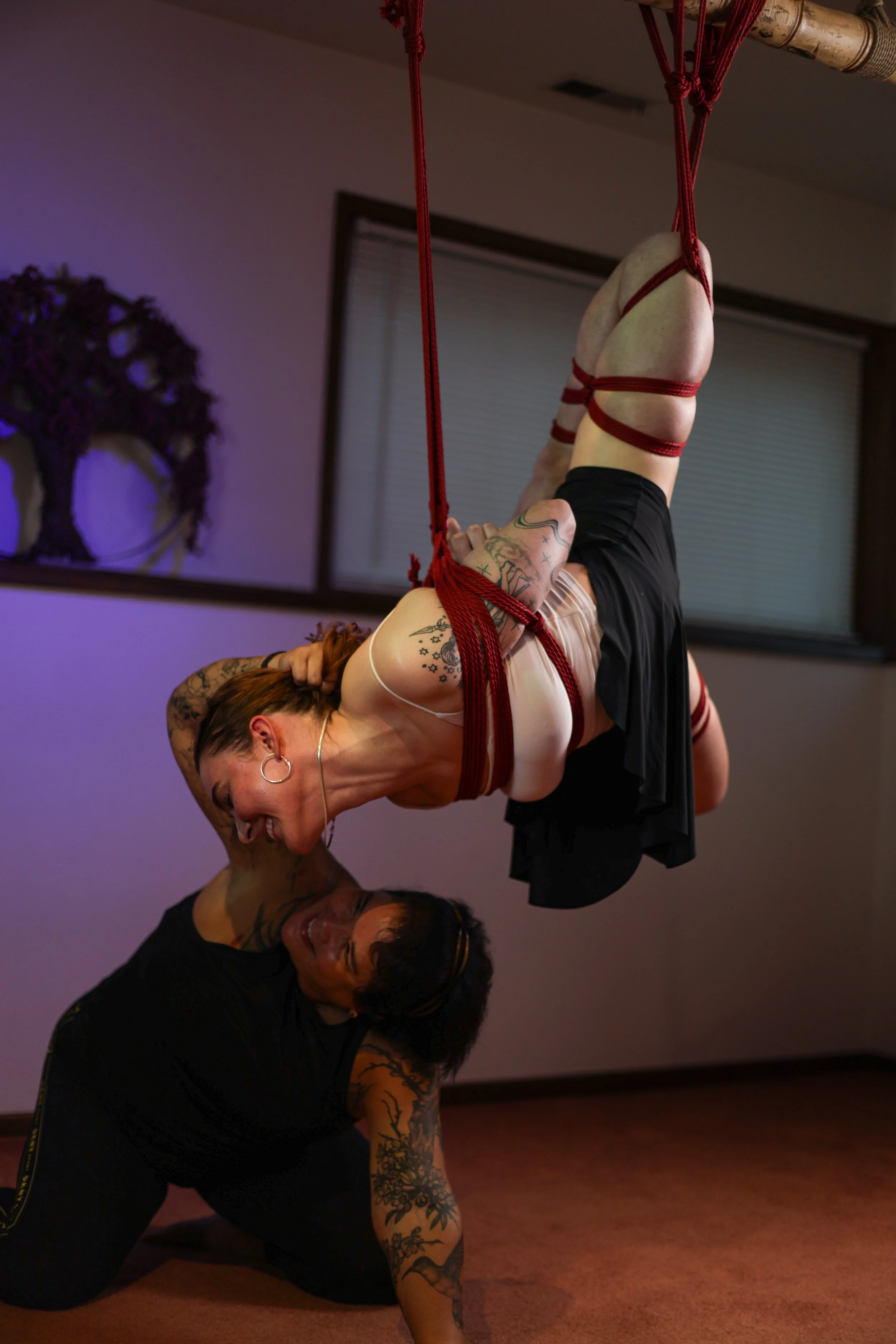
aknottylilbrat (AppleBee) being tied by Natalie Rose
Build consent through trust
Consent isn’t paperwork — it’s a relationship.
It requires honesty and discretion. It requires that you listen, respect boundaries, and never make assumptions about comfort or ability.
Revisit consent before every session.
Update it when something new is introduced.
Honor it when your partner shares something vulnerable.
A skilled rope top learns to recognize the difference between:
challenge that feels empowering
intensity that needs adjustment
discomfort that will ease
pain that requires action now
That awareness protects both of you.
Learn to communicate with intention
Start each session by checking in without rushing. Ask about:
mood
comfort
energy
boundaries
physical limitations
emotional goals
Invite your partner to speak freely, even if their needs have shifted since last time.
Good communication makes your rope more predictable, more stable, and far easier to navigate.
During rope, keep your communication open and simple. Ask clear questions. Watch their breath. Check their hands. Notice their micro-movements. Make space for them to speak without feeling like they are disrupting your flow.
After rope, decompress together. Ask what worked. Ask what didn’t. Ask what changed. These conversations help you refine your skill with each session.
Become consistent in your behavior
Consistency is one of the most underrated skills in rope.
It means your partner knows what to expect from you:
your setup
your preparation
your communication style
your emotional steadiness
your timing
your ability to adapt
your relationship to risk
We build trust by being the same kind of person each time we tie.
It doesn’t mean you never grow. It means your growth is grounded.
A forever student stays consistent, curious, and capable of admitting when something isn’t working.
You learn from each tie.
You improve your body mechanics.
You adjust your uplines.
You refine your sequencing.
You simplify before you complicate.
Skill grows the same way rope moves: one line at a time.
Now: let your learning stay alive
Being a rope top is not about reaching a finish line.
It’s about staying teachable, responsive, and humble.
Your technical skills will evolve, but the qualities that make you trustworthy — consent, communication, consistency — grow with experience and intention.
When you stay a forever student, your rope becomes safer, richer, and more connected.
If you’re ready to explore these skills in private sessions or deepen them with hands-on guidance, You can view current availability at NatalieRoseRope.com.
Your growth continues one scene at a time.