Building Skill as a Rope Bottom
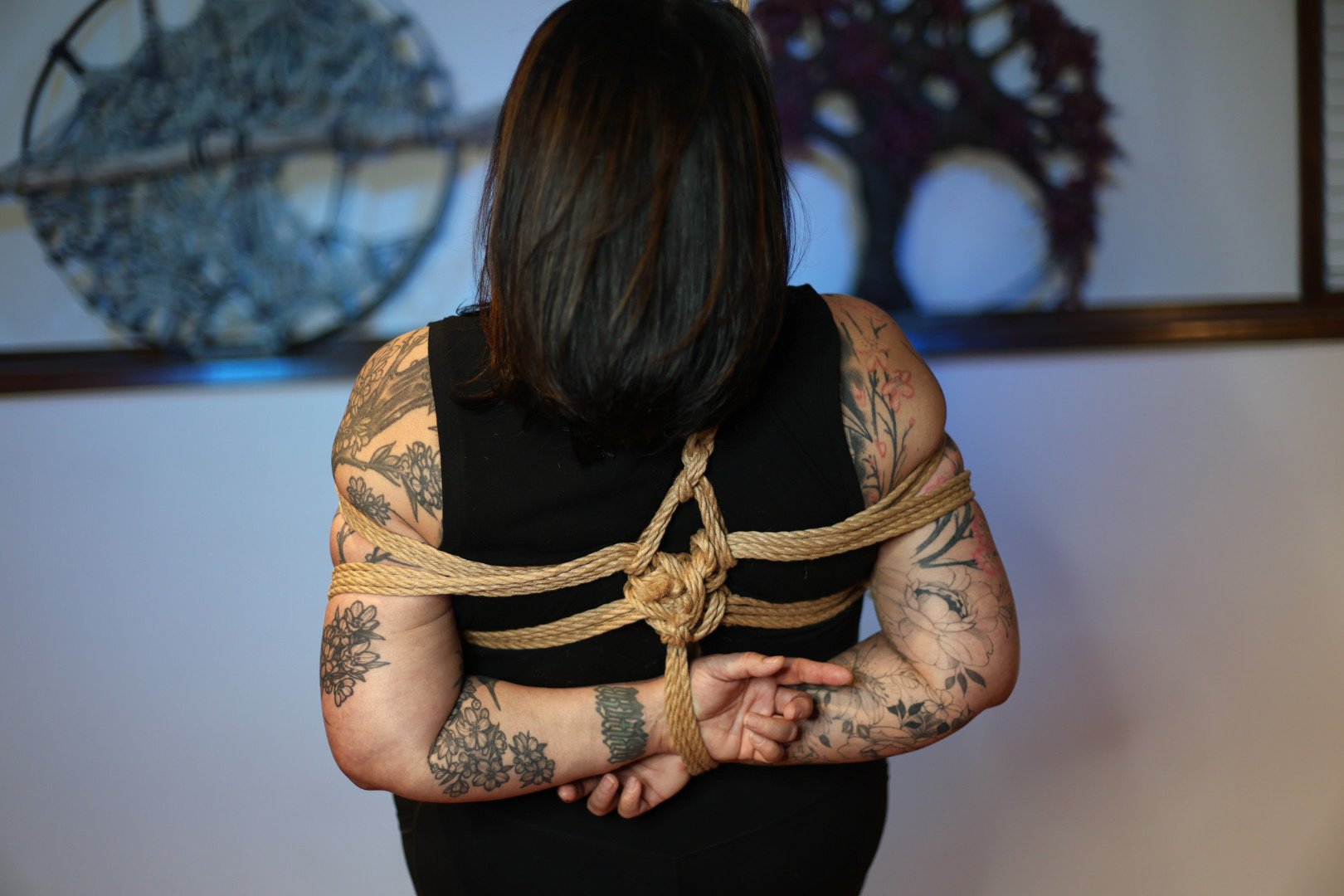
Natalie Rose in a takate kote, tensioned to a bamboo hard point, facing away from the camera and leaning back in order to pre-load the chest harness.
Building Skill as a Rope Bottom
Why understanding your experience matters
Rope brings you into places where sensation, emotion, breath, and body awareness all meet. Some moments feel warm and grounding. Others feel intense or disorienting. Sometimes you float. Sometimes you drop. Sometimes you feel everything at once.
When you’re the one being tied, your experience shapes the entire scene. You’re not passive. You’re not ornamental. You’re an active participant whose body, breath, and communication guide what happens next.
Skill as a rope bottom isn’t about being stoic or silent. It’s about staying present enough to notice what’s happening in your body and knowing what those signals mean. This awareness keeps you safer. It deepens connection. It helps you participate with clarity instead of guessing.
The more you understand your experience, the more confident, grounded, and capable you become in rope.
What this experience really is
Rope bottoming skill has very little to do with flexibility or pain tolerance. It isn’t about endurance or impressing your partner. It’s about learning how your body responds when pressure increases, when load shifts, when breath gets tight, or when emotions rise.
You begin to recognize the difference between:
intensity that feels welcome
sensation that signals something unsafe
discomfort that fades as your body adjusts
pain that needs attention right now
You also learn how breath interacts with rope. A deep inhale expands a chest harness. A soft exhale can calm the nervous system. A tight breath can tell you it’s time to reposition.
Communication becomes part of the experience too. Not performative communication. Not “I’m fine.” Real communication — specific, honest, and immediate enough for your partner to respond.
And there is the emotional side. Rope can bring quiet. Drift. Euphoria. It can also bring adrenaline spikes, fear responses, or a sudden wall of intensity. Float and drop aren’t signs of doing rope “wrong.” They’re natural experiences that become easier to navigate when you understand them.
Rope becomes meaningful when you recognize each of these states without judgment.
How to build that skill in your own practice
Skill grows from foundations like voice, empowerment, active bottoming, and deeper emotional understanding. These aren’t abstract ideas. They show up every time you’re in rope.
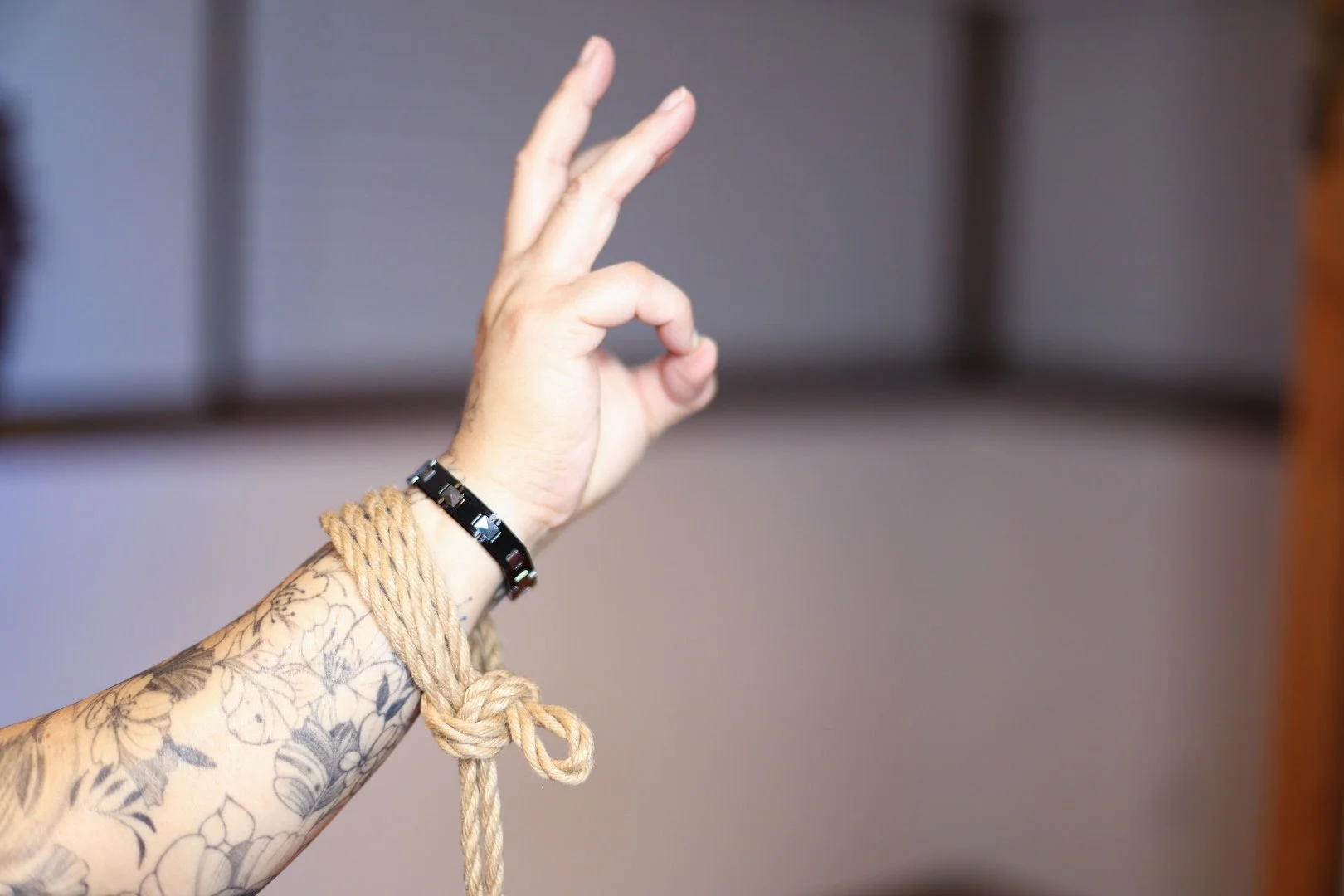
The “OKAY” hand check with a somerville bowline single column around the wrist.
You learn to find your voice
Before rope even touches your skin, you build skill by vetting partners, naming boundaries, understanding risk, and choosing the style of negotiation that supports your safety. You learn to use clear, specific language, not vague statements. You learn to say when something is new. You learn to identify good pain, bad pain, nerve signals, and circulation changes.
These are practical habits, not personality traits.
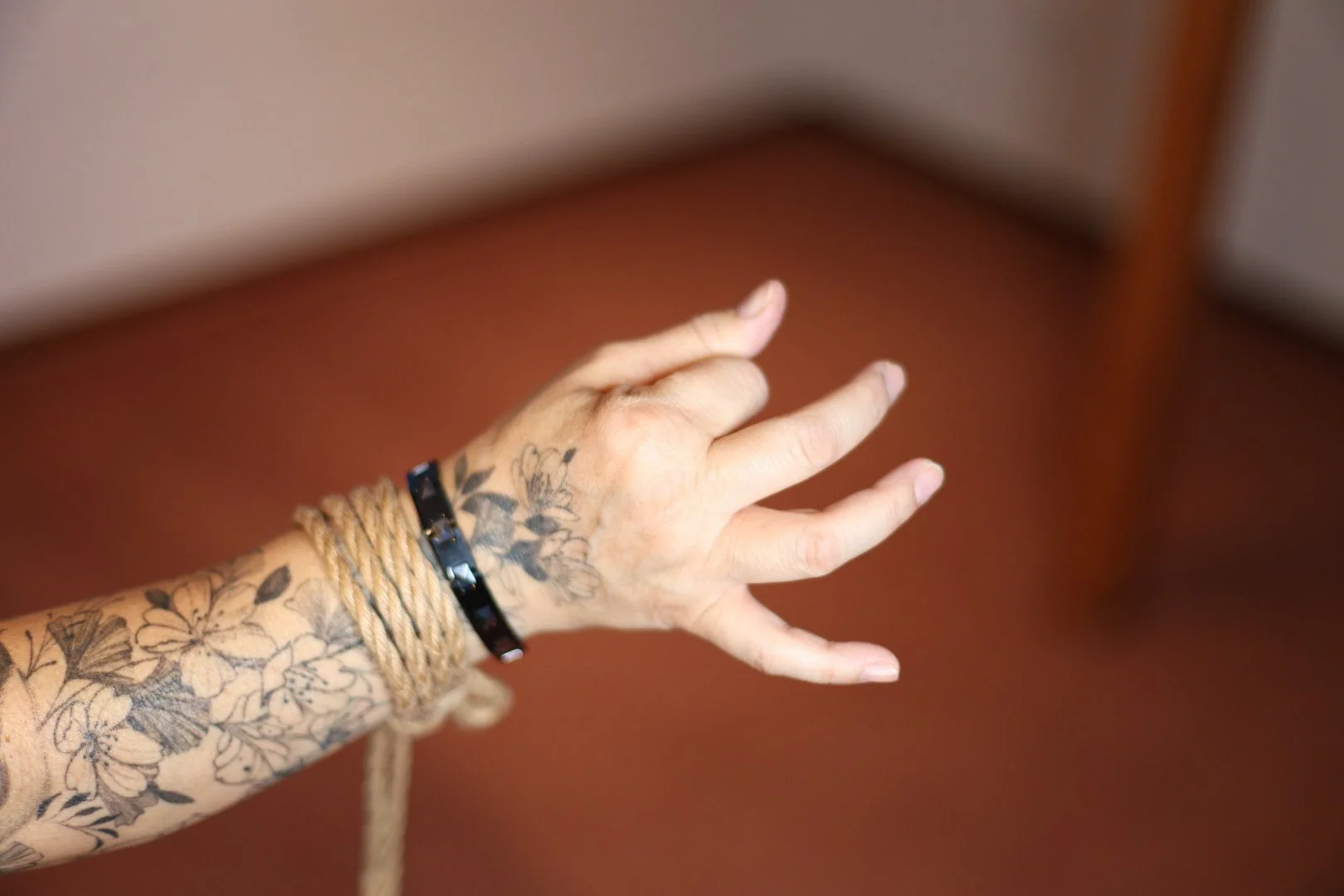
The tactile rub on the side of the finger hand check with a stable, non-collapsing single column around the wrist.
Your body awareness grows through repetition
Each time you get into a tie, you learn something new. You start noticing which positions your shoulders prefer. How your hips respond to compression. What happens to your breath when load increases. How long you can sustain certain shapes before you need to move.
These aren’t guesses anymore, they become familiar patterns.
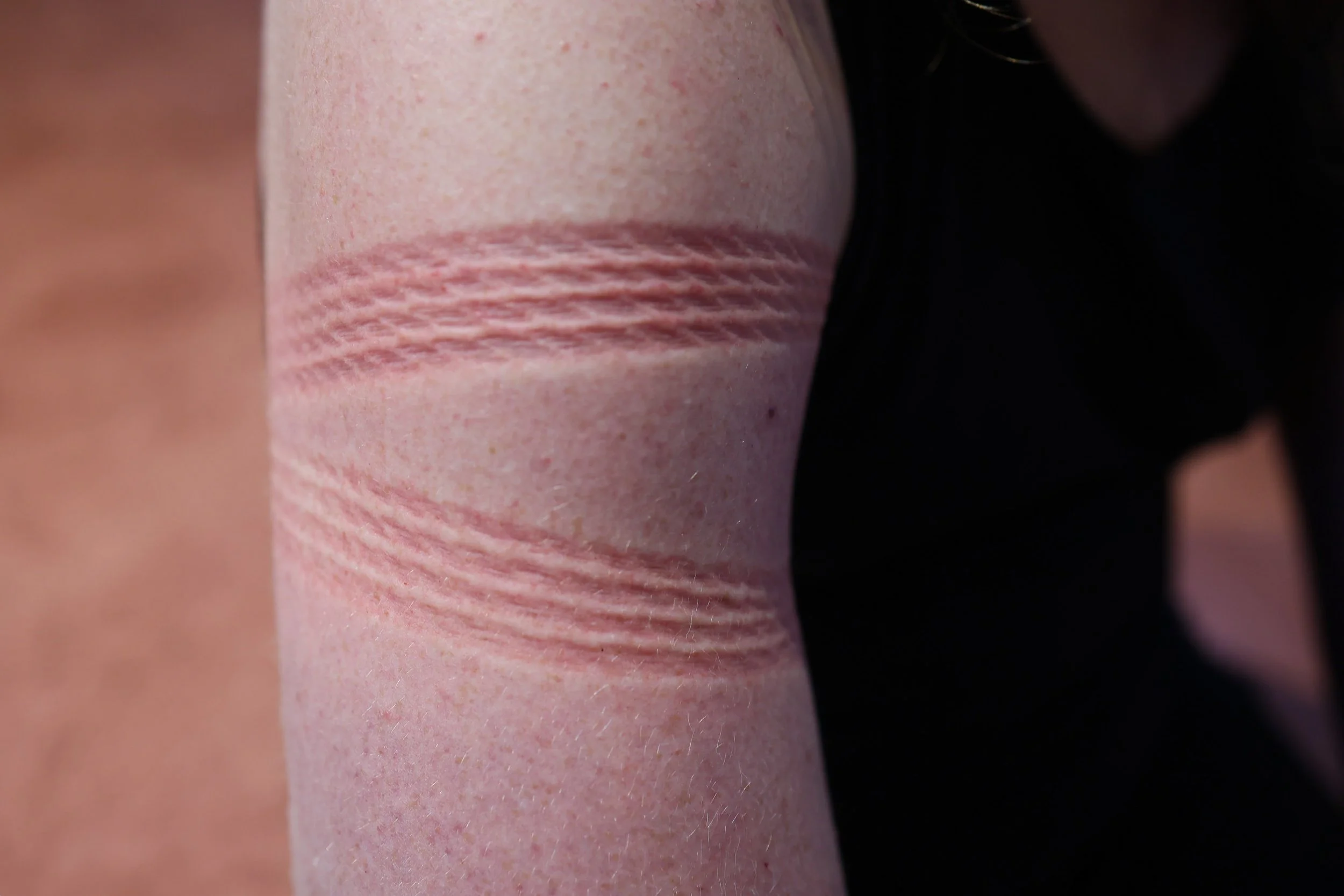
Rope impressions on DrWese from a takate kote, after suspension
Small movements become tools
Micro-movements are a cornerstone of skilled bottoming. Shifting your hips. Engaging your core. Adjusting your feet. These subtle changes redistribute load, protect joints, and make ties sustainable. They help you stay present instead of overwhelmed.
Your body is always giving you information. Skill comes from listening to it and responding with intention.
Breath becomes a way to regulate intensity
In rope, breath does more than keep you calm. It changes how the rope feels.
Breathing high into your chest affects tension across chest wraps.
Breathing lower into your belly can change intensity in the hips.
Pausing for three deep breaths helps separate pain that will settle from pain that signals a problem.
Breath helps you think clearly enough to communicate what you need.
You build emotional skill too
Float can feel dreamy or detached. Drop can feel heavy or quiet.
Neither is a failure. Both are normal reactions to intensity, adrenaline, and connection.
Skill means knowing these states are coming, supporting them, and talking about them.
You learn to stay present enough to advocate for yourself, even when sensations are big.
You begin to recognize your thresholds
With experience, early cues become clear.
A shift in circulation.
A building numbness.
A joint that doesn’t feel supported.
A breath that suddenly feels shallow.
A moment where emotion tilts from grounded to overwhelmed.
Skill is knowing these cues early and communicating before you reach distress.
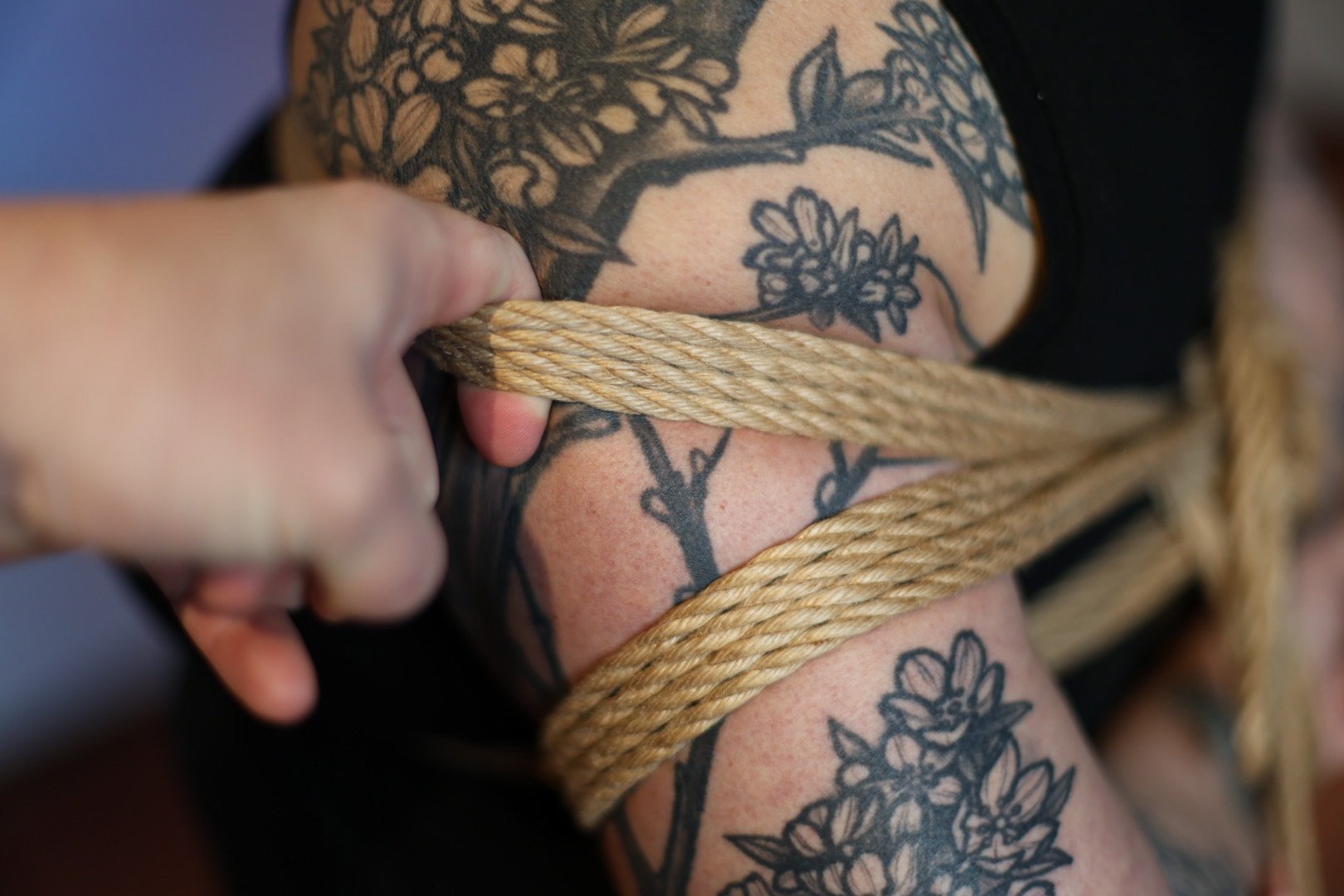
Conroy clearing the top wraps of a takate kote that they have tied onto Natalie Rose
You don’t need to master any of this immediately
You only need curiosity, presence, and willingness to learn.
Every rope scene teaches you something new about your body, your breath, your patterns, and your communication. Over time, these lessons stack into real, sustainable skill.
Now: let your learning continue
Your body will teach you everything you need to know about rope if you give it time and attention. When you approach rope with curiosity and honesty, you build skill without forcing it. You start recognizing patterns. You learn what supports you. You understand how rope interacts with your body and your emotions.
If you want a dedicated space to deepen these skills, a private shibari session might be where you can explore voice, body awareness, breath, positioning, micro-movements, emotional arcs, thresholds, and the realities of semenawa in a structured, supportive environment. You can view current availability at NatalieRoseRope.com.